

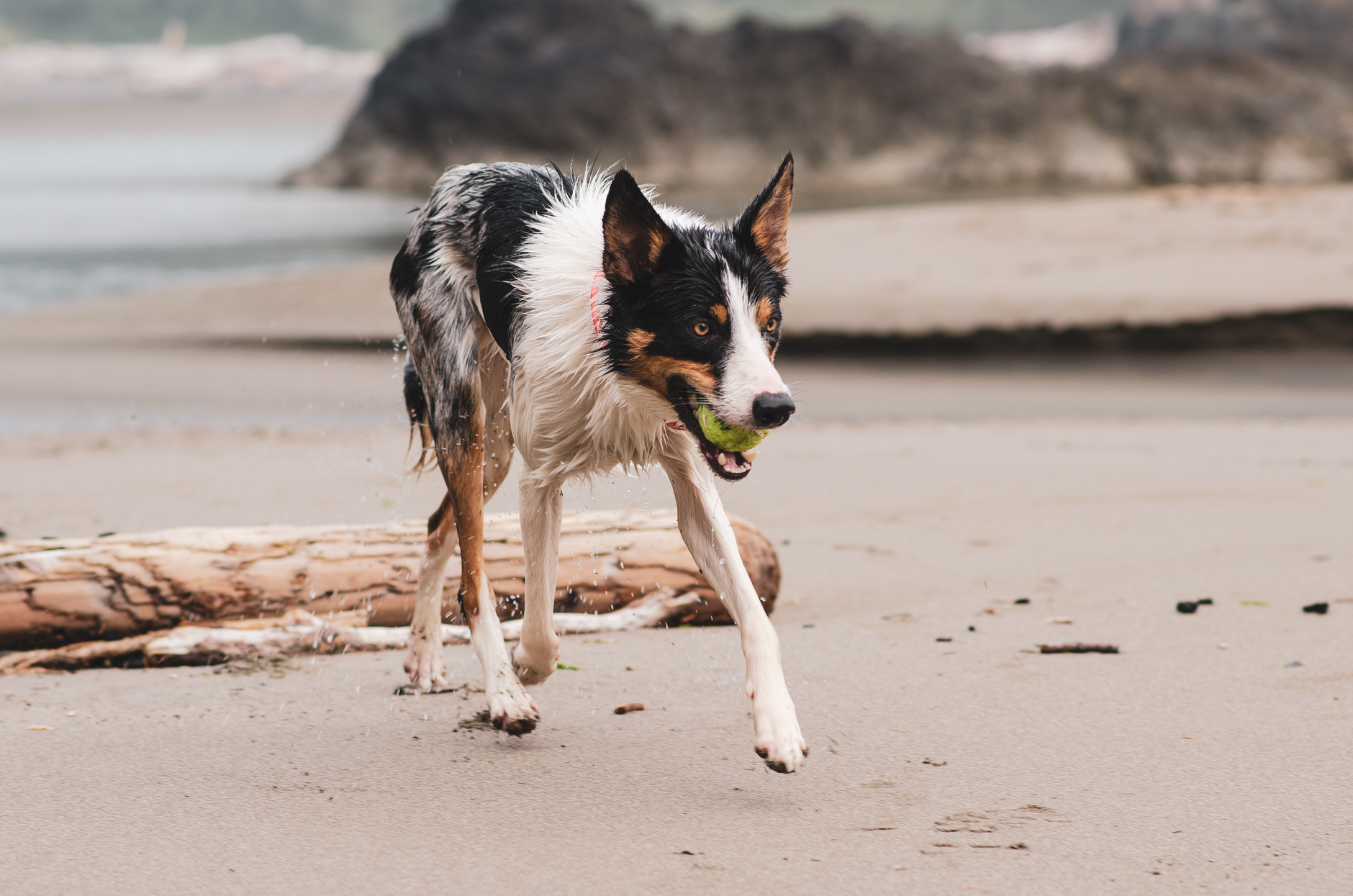
For summer dog walks on sandy paths in Newton, check the ground temperature and protect paws from heat and friction. Dry sand rubs against pads like loose sandpaper, sometimes causing damage before you notice a limp. Sand also absorbs heat quickly in direct sun, getting hot much faster than shaded forest soil.
A busy workday can leave you feeling guilty about keeping an energetic dog indoors. Planning around the heat gives them exercise without putting their pads at needless risk.
One easy detail to miss is friction heat. Blacktop burns paws through direct contact, while shifting sand pushes grains between the pads and wears down their tough outer layer. Set a manageable pace and check paws along the way. Those habits matter as much as watching the temperature.
What’s Inside This Guide
- Trail Essentials for Hot Soil and Shifting Ground
- Daily and Weekly Schedule for Warm Weather Trail Outings
- Preparing Your Dog and Gear Before Hitting Loose Terrain
- Heat Emergencies and Recognizing Pad Trauma
- Trail Hazards and Missteps Dog Owners Often Overlook
- Adjusting Sandy Summer Treks Across Age Groups
- Common Questions About Warm Weather and Sand Walks
- Scheduling Thoughtful Neighborhood and Trail Care in Newton
Trail Essentials for Hot Soil and Shifting Ground
Our warm-weather walking routine comes down to five daily checks. Sand reflects heat onto your dog’s belly, which can raise body temperature and speed up dehydration faster than an ordinary sidewalk loop. Loose footing adds another reason to pay attention throughout the walk.
Video: A review of paw protection for dogs
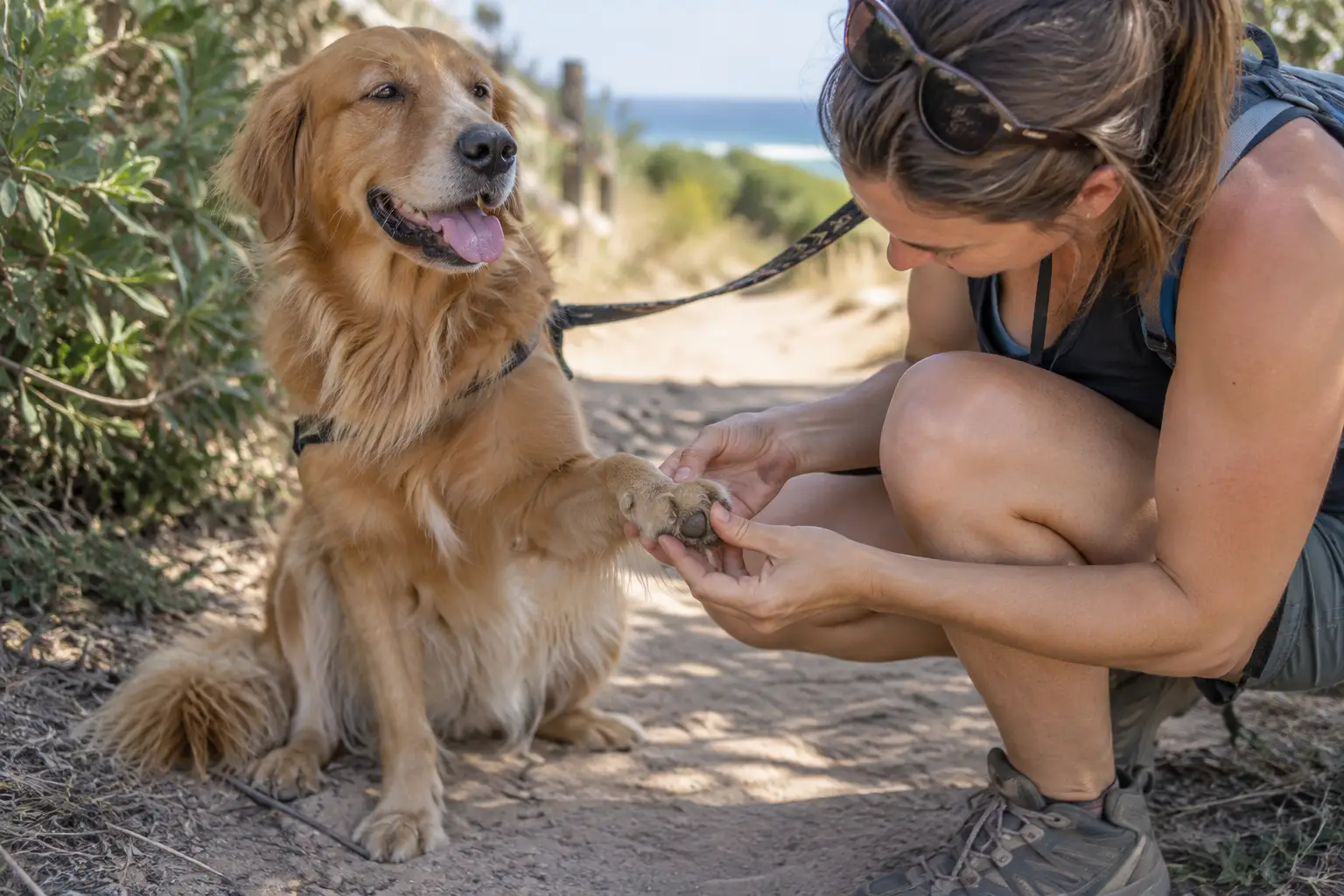
- Hydration: Bring clean water and a collapsible bowl on every walk. Offer small drinks every fifteen minutes rather than letting your dog gulp water from puddles.
- Nutrition timing: Serve main meals at least two hours before or one hour after strenuous exercise to lower the risk of stomach trouble or bloat.
- Controlled exercise: Aim for steady movement. A 30- or 60-minute leashed neighborhood walk gives dogs room to explore without the sudden lunging or overheating common in crowded parks.
- Cooling rest: Give your dog quiet time on cool indoor tile or an elevated mesh cot as soon as you get home from the trail.
- Surface safety: Hold the back of your bare hand against sunny sand for seven seconds. Ground that feels uncomfortable against your skin is too hot for paw pads.
An anxious or leash-reactive dog may find crowded public spaces hard to handle. With planned walks, we can keep stress down while giving them the exercise they need.
Daily and Weekly Schedule for Warm Weather Trail Outings
Paws need time to get used to different surfaces. Over several weeks, gradual exposure helps the protective skin grow tougher. A sudden jump in distance on dry dirt or sand can instead leave your dog with blisters and tiny tears.
Regular checks help you spot small scrapes before they become painful infections. Keeping a steady routine also helps prevent exhaustion. This is how we spread paw care across the week:
| Task | How Often | Tip |
|---|---|---|
| Paw rinse & dry | Daily after walks | Rinse grit from between the toe pads with clean, lukewarm tap water. |
| Surface temperature check | Before every afternoon walk | Test sunny patches with your palm or a handheld infrared thermometer. |
| Pad balm application | 2 to 3 times weekly | Use a food-grade wax balm just before bed so your dog does not lick it off right away. |
| Nail trimming | Every 2 weeks | Keep nails short so pads sit flat on the ground, putting less strain on toe joints. |
| Full skin & between-toe check | Weekly | Spread the toes under bright light and look for burrs, ticks, or red skin. |
These small jobs help keep pads supple enough to bend without losing their toughness. For a look at local dogs out on their daily routes with us, browse our photos from walks.
Preparing Your Dog and Gear Before Hitting Loose Terrain
A little preparation before a sandy walk can spare your dog sore paws afterward. Choose gear that fits and a pace they can comfortably maintain, rather than treating soft ground like a familiar sidewalk.
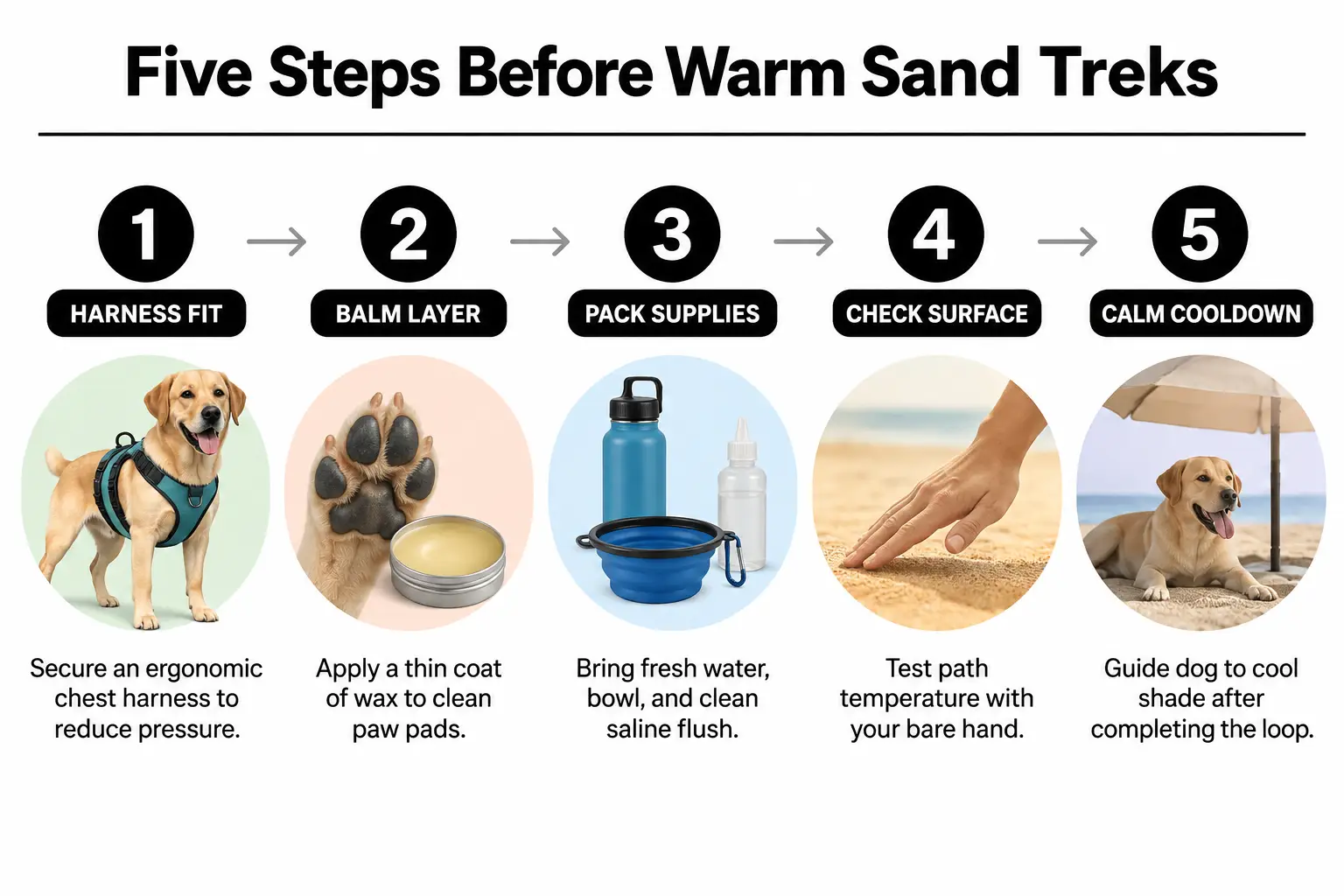
- Fit a supportive harness: Choose a chest harness rather than a neck collar. It spreads pressure more evenly if your dog pulls while crossing soft sand.
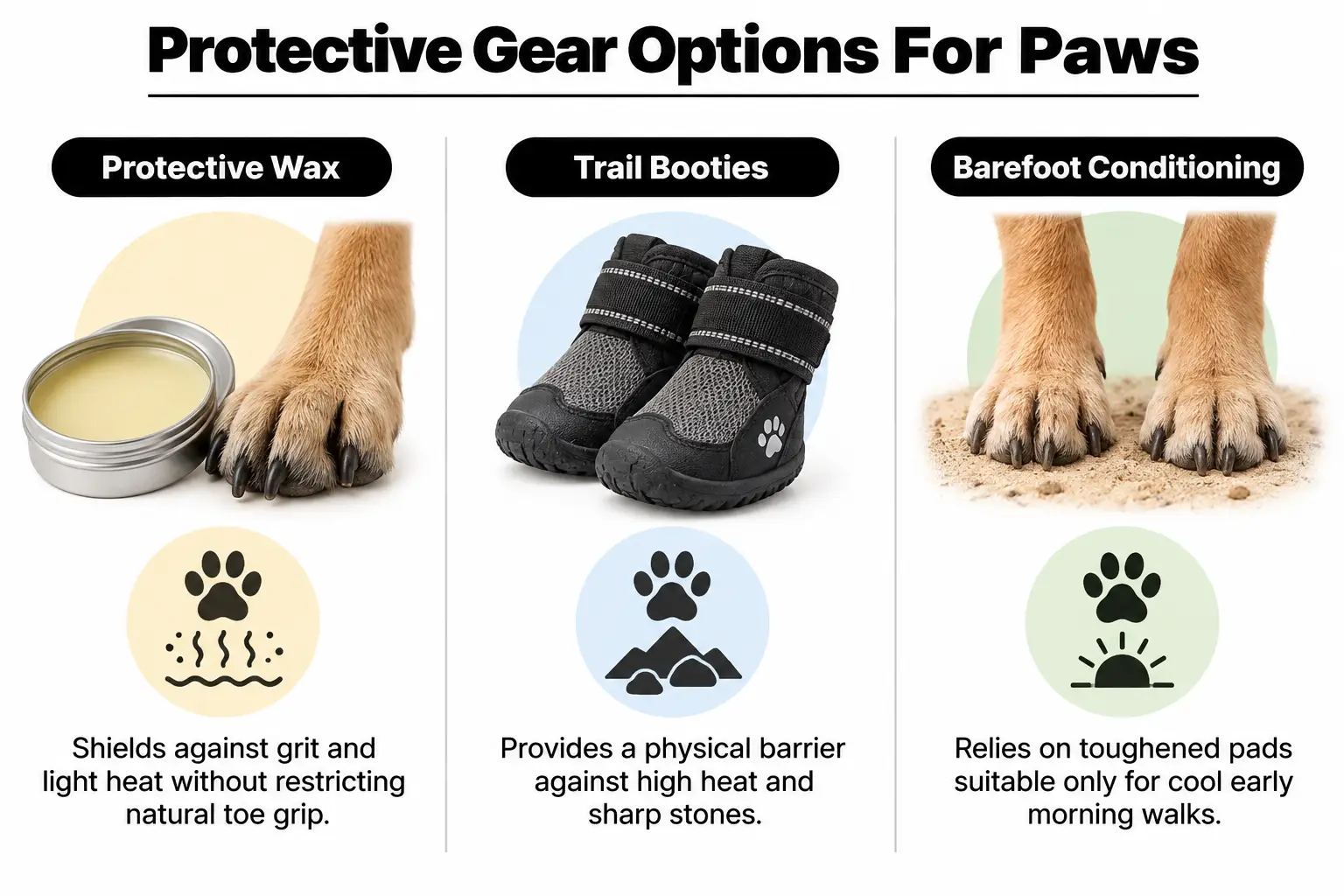
- Pack paw wax or booties: Apply a protective wax such as Musher’s Secret. Breathable, rubber-soled booties are another option for hot ground if your dog accepts footwear.
- Choose a shaded route: Look for paths under mature trees or riverside cover. Your dog should be able to step off warm sand onto damp soil or grass.
- Bring supplies for rinsing: Pack a squeeze bottle of saline or fresh water with clean gauze pads. These are useful if dirt gets into an eye or between toes.
- Finish somewhere quiet: Take your dog straight to a shaded resting spot after the walk. Watch their steps for hesitation or a limp as you head there.
Ten minutes spent checking equipment can save hours of caring for raw paws later. You can read about our team for more on our animal-handling background and how we run our family business.
Heat Emergencies and Recognizing Pad Trauma
Dog paws can take plenty of wear, but burns and heat exhaustion need immediate attention. Dogs cannot sweat across their bodies the way people do. They cool themselves mainly by panting, with only a little heat escaping through their paw pads.
The American Veterinary Medical Association warns in its warm-weather advice that heatstroke can worsen quickly on warm, humid days. Watch for heavy panting with glazed eyes, thick drool, or dark red gums. Weakness, vomiting, and sudden stumbling are warning signs too.
Sore or burned pads show up differently. A dog that stops walking, keeps licking their feet, or holds up a paw needs a pad check right away. First-degree burns cause redness and swelling. Severe burns peel away the black outer tissue, leaving raw pink skin exposed.
Signs of overheating call for immediate action: move your dog into air conditioning and wet their neck and groin with cool, never ice-cold, water. Contact an emergency veterinarian immediately. For questions about our heat precautions, reach our team directly.
Trail Hazards and Missteps Dog Owners Often Overlook
Even experienced dog owners can overlook how much a familiar trail changes in hot weather. Cloud cover and a nearby swimming spot do not remove every risk. Keep these common mistakes in mind as you plan the walk.
- Trusting cloudy skies to mean cool ground. Sand holds heat long after direct sunlight fades.
- Letting dogs dig into sun-baked banks, where sharp pebbles and hot mineral dust can reach the thin skin between their toes.
- Dropping leash rules on loose ground. Sudden sprints on shifting slopes greatly increase the risk of tendon sprains and torn dewclaws.
- Counting on a dip in the water for cooling without considering paws. Wet pads soften and wear down faster once a dog returns to dry grit.
Trail safety rule: Avoid loose, unshaded sand from midday through late afternoon, and plan walks for early morning when the ground is coolest.
Clients often mention our care in choosing routes during heat waves. Their comments are on our reviews page.
Adjusting Sandy Summer Treks Across Age Groups
Stamina and pad thickness change as dogs grow older. Adjusting summer walks to their age helps protect joints and skin that cannot yet, or can no longer, handle the same strain.
Puppies and Young Dogs
Puppy pads are thin and tear easily from rubbing. Start with five-to-ten-minute sessions on soft ground. Their growth plates, the areas where bones are still growing, cannot handle the twisting forces of deep sand. Keep activity gentle and under control.
Adult Dogs
Healthy adult dogs have tougher pads and stronger muscles, so they can usually handle regular walks on sandy trails. High-drive working breeds may still chase a toy despite serious discomfort. Make time for water breaks and quiet pauses rather than waiting for your dog to stop.
Senior Companions
Older dogs often have drier pads and stiff joints. Shifting ground asks more of the muscles around arthritic hips and shoulders. Choose firm, packed trails instead of deep sand, and keep walks short with a slow pace on level ground.
Individual walks let us match the pace to a nervous dog or senior’s physical limits while you’re at work. Share your dog’s age and health history through our pet care inquiry form so we can discuss their needs.
Common Questions About Warm Weather and Sand Walks
How hot does trail sand get compared to asphalt?
Sand heats nearly as fast as asphalt in direct sun, often passing 120 degrees Fahrenheit when the air is in the eighties. The National Weather Service’s heat safety guidance explains that ground surfaces absorb heat throughout the day. Loose ground can therefore be dangerous for bare paws.
Can I use human moisturizer on dry dog paws?
Human lotions and creams can soften paw pads too much, and their ingredients may be toxic if licked. Leave them off your dog’s feet. Use a veterinarian-approved balm made with beeswax, shea butter, or food-grade coconut oil instead.
What should I do if my dog gets sand in their eyes while walking?
Rinse the eye right away with sterile saline eye drops from your pet first aid kit. Stop your dog from rubbing their face with their paws. Contact your veterinarian if squinting or cloudiness lasts longer than an hour.
Are booties necessary for every dog on sandy paths?
Brief morning walks on cool ground do not require booties. They are essential, though, if you must cross exposed, warm trails in the afternoon. Let your dog practice wearing them indoors with praise before trying an outdoor walk.
Why does my dog limp after walking on loose dirt or sand?
Limping often comes from grit caught between toes or friction blisters. Small muscle strains from shifting ground can cause it too. Wash the paws with clean water and check each pad under bright light. Rest your dog for twenty-four hours.
Scheduling Thoughtful Neighborhood and Trail Care in Newton
At Walk This Way Pet Services, we’ve cared for neighborhood dogs across Newton, MA since 2012. Our team is trained in pet CPR and first aid. You can learn about our pet care services and how we help dogs get regular exercise through the warmer months.
We offer quiet midday bathroom breaks and 30-, 45-, or 60-minute leashed walks, adjusting visits to your dog’s pace and summer temperatures. To arrange care, contact us about your walking schedule.
Pet health note: This article is general information and isn’t veterinary advice. Every pet is different, so ask your veterinarian about your pet’s health. If you think your pet has an emergency, call an emergency vet right away.